
Why Regular Cleaning Matters
If you're a restaurant owner reading this after a backup during Friday dinner service, you already know how bad the timing can get. Our job is making sure that never happens on your schedule again.
A grease trap that isn't cleaned on schedule fills up. It starts letting grease pass into the sewer line, which is exactly what it's designed to prevent. That can cause slow drains and backups inside the kitchen, long before it becomes an obvious problem — the kind our drain cleaning team gets called out for once it's already backed up. Repeated grease discharge violations can also bring fines from the local utility provider, on top of the operational headache. For broader commercial maintenance, see our commercial plumbing page.
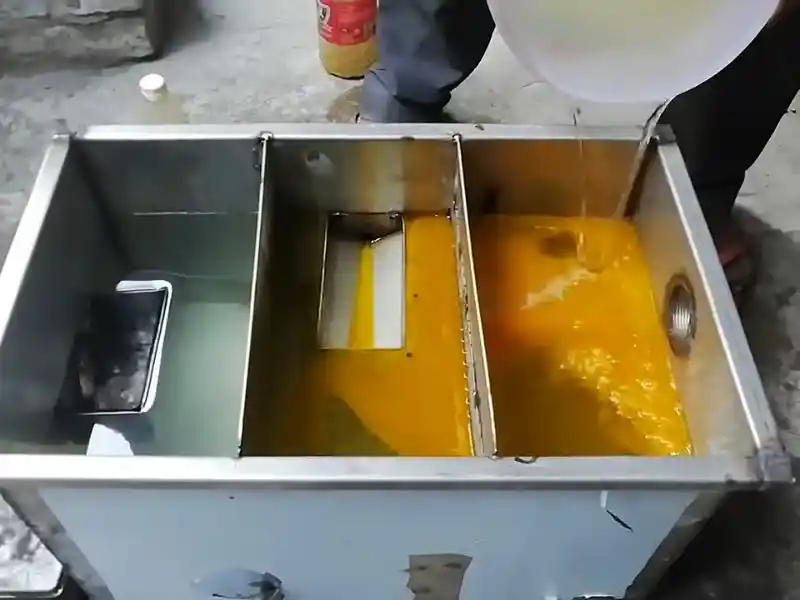
What Happens If Cleaning Falls Behind Schedule
A missed cleaning doesn't just mean scheduling it later. It has real operational cost.
Backups hit during peak hours
A trap nearing capacity tends to overflow under load, which usually means the middle of a busy dinner service, not a slow Tuesday.
Fines add up fast
Repeated grease discharge violations bring real fines from the utility provider, on top of the cost of the cleaning itself.
Inspections can flag missing records
Inspectors expect to see service records. A gap in those records can turn an otherwise clean inspection into a problem.
How Often Cleaning Is Actually Needed
Most food-service kitchens need grease trap service every one to three months, and the right interval depends on your specific volume.
- Assess your kitchen's actual fry volume, not a generic industry default
- Set a realistic cleaning schedule around your real usage
- Provide documentation for health inspections as part of routine service
- Flag early if your current schedule isn't keeping pace with volume
Serving the Local Commercial Corridor
Bonita Springs has a lot of restaurants and shops along the Production Circle and US-41 corridor, including the restaurant row near Coconut Point. We service properties across that area on a routine basis. That's alongside our broader commercial plumbing work.
Patterns We See on Calls Like This
A frequent call comes from a restaurant that had a backup during peak service and is now looking to switch from reactive to scheduled cleaning. In most of these cases, once we establish an actual volume-based schedule instead of guessing, the same overflow issue doesn't come back. The clean service records also tend to make health inspections noticeably less stressful going forward.
| Service | Typical Cost Range | What Affects the Price |
|---|---|---|
| Routine grease trap cleaning | $200 – $450 | Trap size, grease volume |
| Emergency cleaning (overflow/backup) | $350 – $700 | Severity, time of service |
| Recurring service contract | Custom quote | Frequency, number of locations |
Ranges reflect typical SWFL commercial market pricing and vary by trap size and grease volume. Final pricing is confirmed on-site.
Frequently Asked Questions
How often does a restaurant grease trap need cleaning?
Most food-service properties need cleaning every one to three months. It depends on volume and menu type. High-volume kitchens with a lot of fried food often need more frequent service than lower-volume operations.
What happens if a grease trap isn't cleaned regularly?
Grease builds up until it overflows into the sewer line. That can cause backups in the kitchen and potential code violations. Local utility providers can issue fines for repeated grease discharge violations.
Do you work with commercial properties along Production Circle and US-41?
Yes. We service restaurants and other food businesses across Bonita Springs. That includes the Production Circle and US-41 area.