
Most Bonita Springs homes keep the water heater in the garage. Garages are often the first part of a home that floodwater reaches during a serious storm. A water heater that takes on contaminated water is usually a total loss, not a repair candidate. A bit of prep before hurricane season can genuinely save the unit.
Why Floodwater Ruins a Water Heater
It's not just the electrical components at risk, though a submerged electric water heater is a real safety hazard on its own. Floodwater carries contaminants, silt, and debris. These get into the tank, insulation, and internal components in ways that don't clean out easily. Even if a unit seems to work after drying out, corrosion and contamination often shorten its remaining life a lot. That's why replacement is usually the safer call after a real flood event.
Elevating the Unit
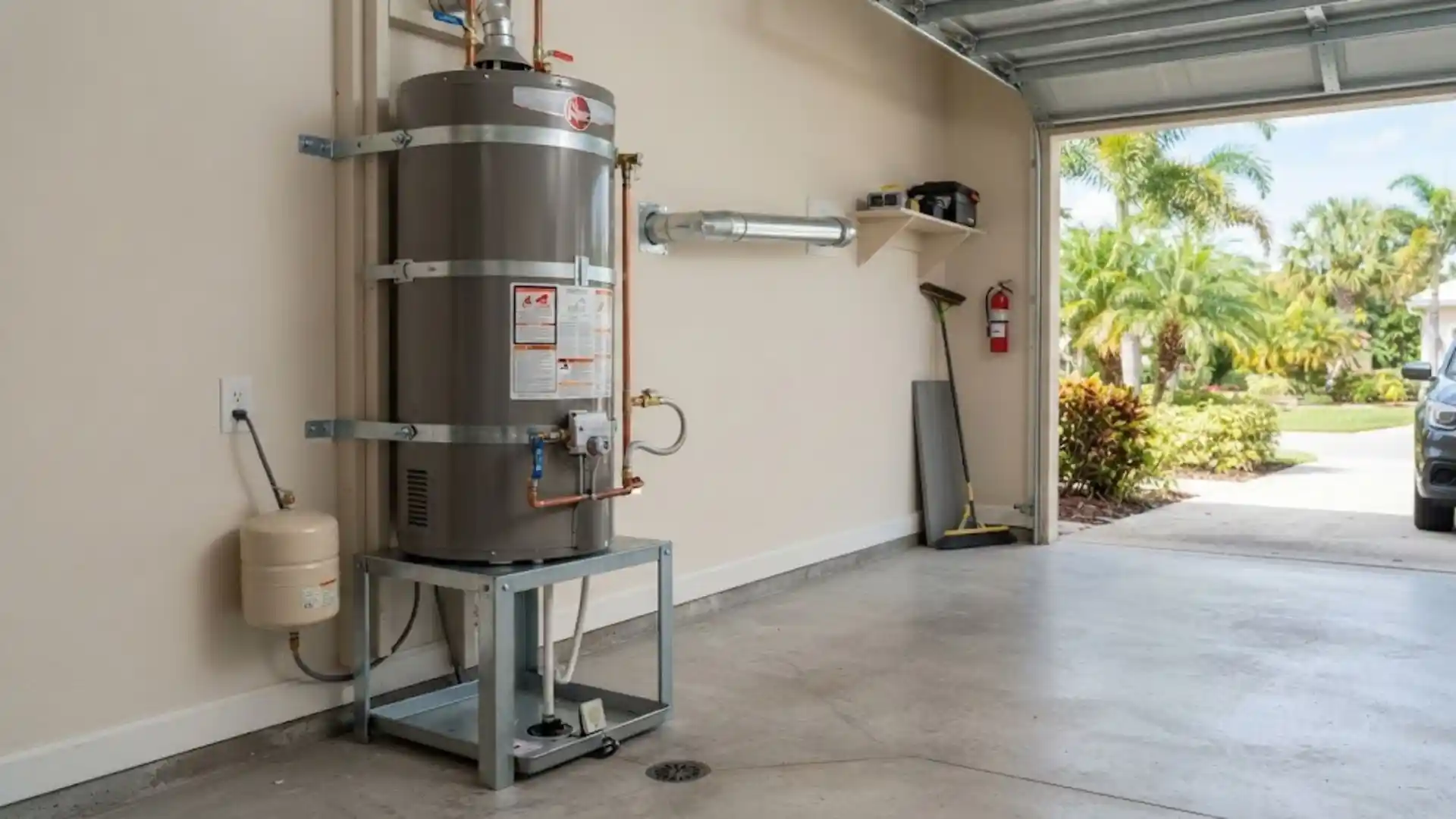
If your water heater sits directly on the garage floor, and your home is in a flood-prone area, raising it onto a stand gives it a real chance of staying dry during moderate flooding. This matters most closer to the Imperial River or in a low-lying section of the city. It's not a guarantee against a major storm surge event. It does meaningfully cut the risk from the more common scenario: a few inches of water finding its way into the garage.
Know the Shutoff Points
Before storm season, confirm you know how to shut off both the water supply and the power (or gas) to your water heater. If flooding does reach the unit, or even seems likely to, shutting off power to an electric water heater before water arrives is a real safety step, not just a precaution. For gas units, shutting off the gas supply matters just as much.
Consider Age When Deciding How Much to Invest in Protection
A water heater already near the end of its typical lifespan, usually past the ten-year mark, might not be worth a lot of flood-protection investment if replacement is likely coming soon anyway. A newer unit, especially a tankless system already elevated on a wall instead of the floor, may need less intervention in the first place. Knowing your unit's age and type helps decide how much prep effort makes sense.
After the Storm: What to Check
If your water heater was exposed to floodwater, don't just turn it back on and assume it's fine. Look for visible water lines on the tank. Check for debris or silt around the base. Have it inspected before relying on it again. This matters especially for a gas unit, where a compromised component poses more than just a plumbing risk. If in doubt, treat it as a professional inspection situation rather than guessing.
| Prep Step | Why It Helps |
|---|---|
| Elevate unit on a stand | Reduces exposure to minor flooding |
| Know water/power/gas shutoff points | Enables fast action before water arrives |
| Assess unit age beforehand | Informs how much prep investment makes sense |
| Inspect after any flood exposure | Confirms safety before returning to use |
The Bigger Picture
A water heater is one of the more expensive parts of a home's plumbing system. It's also one of the more vulnerable to flood damage, given its typical garage placement. A little prevention goes a long way toward avoiding an unplanned full replacement cost in the middle of storm recovery: elevation where practical, knowing the shutoffs, and an honest look at the unit's age.
Tankless Units and Storm Prep
Tankless water heaters are often wall-mounted. That already puts them at an advantage during minor flooding, compared to a floor-standing tank unit. That said, they're not immune to storm risk entirely. Power surges during storms can damage the electronic components in a tankless system. A surge protector on the unit's power supply is worth considering, if you don't already have whole-home surge protection. Gas-powered tankless units also have venting that wind-driven debris can affect. Worth a quick visual check after any major storm.
What Insurance Typically Covers
Sudden and accidental water heater failure is often covered differently than flood damage under a standard homeowner policy. That distinction matters if your unit is damaged during a storm. A water heater that fails on its own due to age or a mechanical issue is usually treated as a covered plumbing failure. One destroyed by rising floodwater may fall under separate flood insurance rules, depending on your policy and whether you carry flood coverage at all. Confirm these details with your insurance provider well before storm season, not during a claim.
Replacing a Storm-Damaged Unit
If your water heater does need replacement after a storm, it's often a good moment to rethink the setup entirely. Switching to a tankless system. Relocating the unit to a less flood-prone spot, if your home's layout allows it. Upgrading to a more efficient model. A forced replacement isn't ideal timing, but it can be a chance to fix a vulnerability instead of just replacing what was there before.