
Water finding its way into a Bonita Springs home during a storm is stressful. Whether from surge near the Imperial River, wind-driven rain, or a plumbing failure the storm triggered, it's hard enough without also trying to figure out what to do first. Here's a straightforward order of operations for that first hour.
First: Get People Safe
Before anything involving water or property, make sure everyone in the home is away from standing water near outlets, panels, or any powered equipment. Water and electricity are a dangerous combination. No amount of property damage is worth the risk of getting that wrong in the first few minutes.
Second: Shut Off the Water Source If You Can Identify It
If the water is coming from inside the home, a burst pipe or a failed water heater connection, shutting off the main water valve stops it from getting worse. If the water is coming from outside, storm surge or heavy rain finding its way in, there's no valve to close. It's still worth checking that your sump pump and backflow valve are doing their job.
Third: Cut Power to Affected Areas If You Can Do It Safely
If water is anywhere near an electrical panel or outlets, and you can safely reach the breaker for that section, shut it off to reduce risk. If reaching the panel means walking through standing water, don't. Wait for the water to recede, or for a professional who can handle it safely.
Fourth: Start Moving What You Can
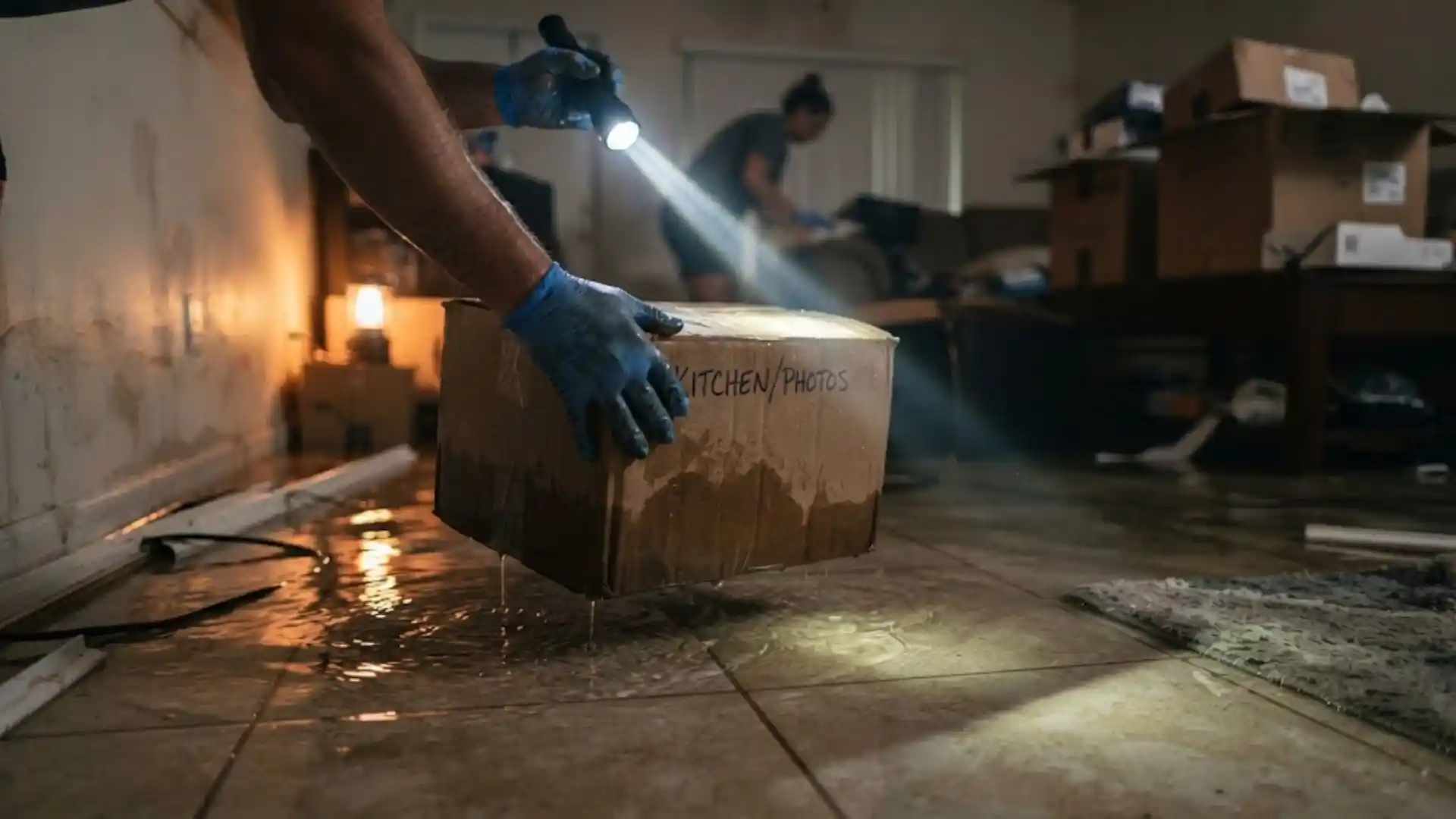
Furniture, electronics, and anything easily damaged should move to higher ground, if it's safe and quick to do. This isn't about saving everything. It's about cutting down the list of things that need replacing once the water's gone. Don't put yourself at risk moving anything heavy alone in the middle of an active event.
Fifth: Document Before You Clean
Once the safety and water-stopping steps are handled, take photos and video of the water level, affected areas, and any visible damage. Do this before you start moving things or cleaning up. This documentation matters for insurance claims. It's much easier to capture accurately in the moment than to reconstruct later.
Why Speed Matters in Florida Specifically
Mold can begin developing within 24 to 48 hours of standing water in Florida's heat and humidity, faster than in drier climates. That's why extraction and drying need to start as soon as it's safe, not once the storm has fully passed and life gets back to normal. The gap between "water got in" and "we started drying it out" is often the difference between a plumbing repair and a much larger mold remediation project.
| Step | Priority |
|---|---|
| Get everyone away from water near power sources | Immediate |
| Shut off water source if identifiable | Immediate |
| Cut power to affected areas if safe | Immediate |
| Move valuables to higher ground | As conditions allow |
| Document damage with photos/video | Before cleanup begins |
When to Call for Help
If water is actively entering the home and you can't identify or stop the source, that's the point to call for emergency plumbing and water extraction help rather than handling it alone. Same goes if the volume is more than you can reasonably manage. A fast professional response in the first few hours usually costs less, in both money and stress, than dealing with water that's been sitting for days.
What Happens After the First Hour
Once the immediate response is handled, the next phase is extraction and drying. Ideally that starts within hours, not days. Industrial fans and dehumidifiers do the bulk of the work here. Running them continuously for several days usually works better than intermittent use. If carpet, drywall, or insulation has been saturated for more than 24 to 48 hours, that material will likely need to be removed and replaced rather than dried in place. It's already past the point where mold risk becomes significant.
Dealing With Your Insurance Company
Most homeowner policies treat sudden plumbing failures, wind-driven rain, and flood damage from rising water differently, and each category can play out differently under your specific policy. Documentation from the first hour helps here. Photos, video, and notes on when the water appeared and how it entered give your adjuster a clearer picture and can speed up the claims process. If you're not sure which category your situation falls under, ask your agent directly rather than guessing.
A Realistic Expectation for Recovery
Even with a fast response, full recovery from a significant water intrusion event often takes days for drying and longer for any structural repairs. Setting that expectation early avoids the frustration of assuming a wet carpet or drywall section should be back to normal within a day or two. The first hour is about stopping the bleeding, not finishing the job.