
Bonita Springs has a real concentration of food-service businesses along corridors like Production Circle and US-41. Grease trap upkeep is one of the more overlooked compliance items. It usually stays overlooked until it causes a problem during a busy service or shows up as a flag on a health inspection.
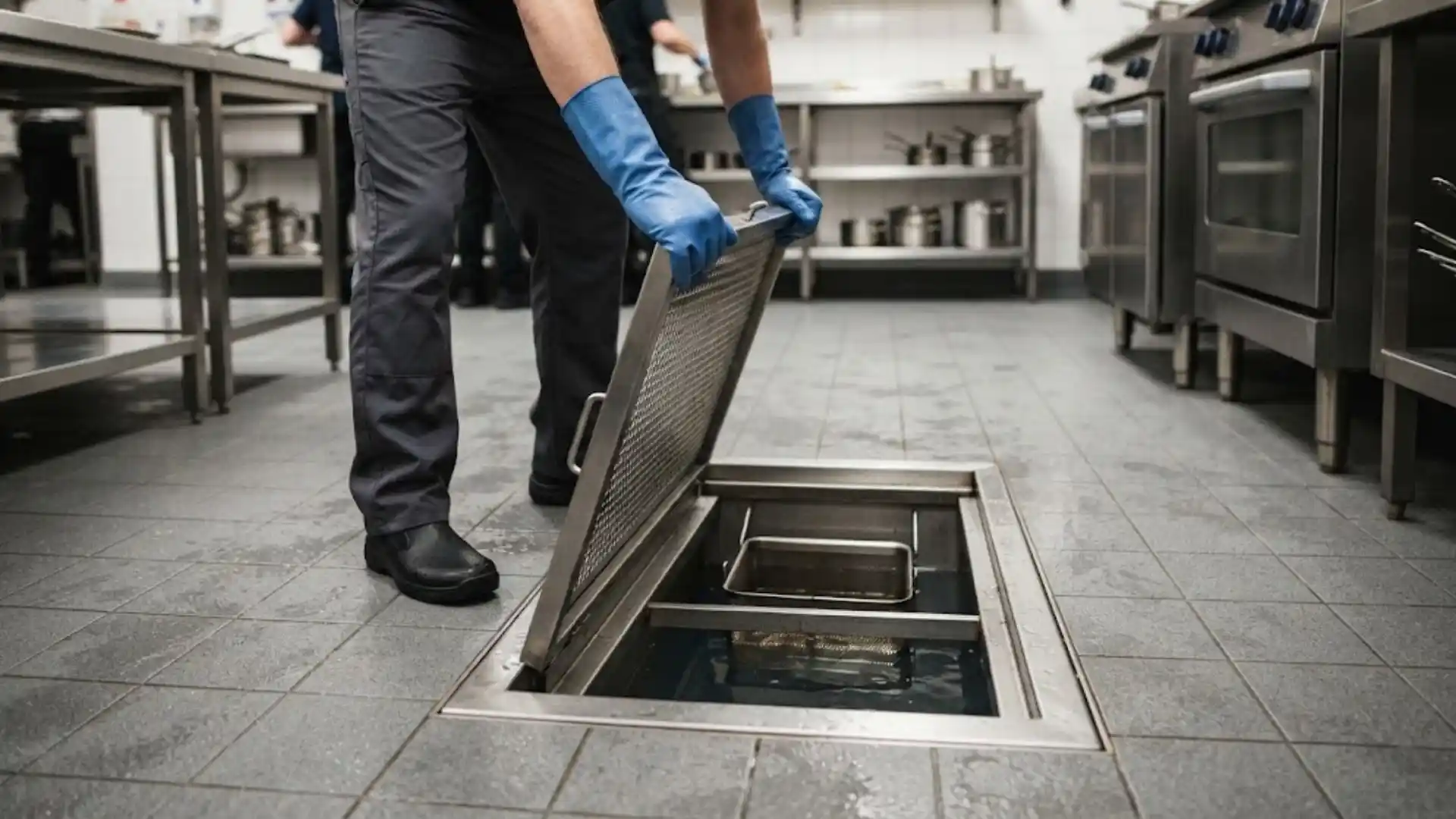
Why Grease Traps Exist in the First Place
A grease trap catches fats, oils, and grease before they reach the municipal sewer line. That material hardens as it cools. It builds up inside pipes over time, both yours and the shared municipal system's. Local utility providers, including Bonita Springs Utilities, treat grease discharge violations seriously. A single non-compliant business can add to blockages that affect the broader sewer system, not just their own plumbing. A well-kept trap protects your own kitchen plumbing just as much as the shared infrastructure downstream.
How Often Cleaning Is Actually Required
Most food-service kitchens need cleaning every one to three months. The right frequency depends more on volume than on restaurant size. A smaller kitchen doing high-volume fried food can fill a trap faster than a bigger space with a lighter menu. Rather than guessing, track how full the trap is at each visit over the first few months. That gives you a realistic interval for your actual operation.
What Happens If You Fall Behind
A trap that overflows starts letting grease pass into the sewer line. That's exactly what the trap exists to stop. It often shows up first as slow drains in the kitchen, then as a full backup during service — the kind our drain cleaning team gets called for once it's already a problem. That's close to the worst possible timing for a restaurant. Beyond the operational headache, repeated grease discharge violations can bring fines from the utility provider. A documented pattern of non-compliance can also complicate health inspection outcomes.
Keeping Documentation for Inspections
Health inspectors usually want to see a documented cleaning schedule and service records. Not just a working trap on the day of inspection. Keep consistent records. Dates, volume removed, and maintenance notes. That beats relying on memory or informal tracking. A recurring service arrangement naturally generates this documentation as part of the routine — the same approach we use for broader commercial plumbing maintenance contracts.
Setting Up a Maintenance Contract
For most Bonita Springs food-service properties along the East Naples and Production Circle corridors, a recurring service schedule works out better than reactive cleaning. Better than calling only when there's a problem. It avoids the disruption of an emergency cleaning during service hours. It keeps documentation consistent for inspections. It usually costs less over a year than an overflow-driven emergency call plus the cleaning that would have happened anyway. Most operators find that once a contract is set up, grease trap upkeep stops being something they have to think about at all.
| Service | Typical Frequency | Typical Cost Range |
|---|---|---|
| Routine grease trap cleaning | Every 1-3 months | $200 – $450 |
| Emergency cleaning (overflow) | As needed | $350 – $700 |
What to Do If You're Not Sure Where You Stand
If you've never had a formal cleaning schedule, or you're not confident in your current documentation, the simplest starting point is a current assessment. Get the trap's condition checked and a recommended schedule based on your actual kitchen volume. Getting ahead of this is a lot less disruptive than dealing with an inspection issue or a mid-service backup after the fact. A short conversation now can save a much longer one with a health inspector or an unhappy dinner crowd later.
The Bonita Springs Commercial Corridor Specifically
Production Circle and the broader US-41 corridor through Bonita Springs carry a real concentration of restaurants, cafes, and food-service tenants. Local demand for grease trap service is genuinely high. Scheduling ahead matters more here than in areas with fewer food-service businesses competing for the same service windows. If you're opening a new location or taking over an existing space along this corridor, check the grease trap's service history and current condition before your first health inspection. Existing traps in older commercial buildings sometimes weren't sized for a new tenant's higher-volume menu. That's worth checking during lease talks, not after opening.
Multi-Location Operators
Restaurant groups or franchise operators with more than one Bonita Springs location benefit from a single coordinated maintenance contract. It simplifies both scheduling and paperwork. Rather than tracking separate service histories and renewal dates for each address, one schedule keeps every location on the same cadence. It also makes it easier to spot if any single property is running through its trap capacity faster than the others. This approach simplifies handing documentation to a health inspector who visits multiple locations under the same owner.