
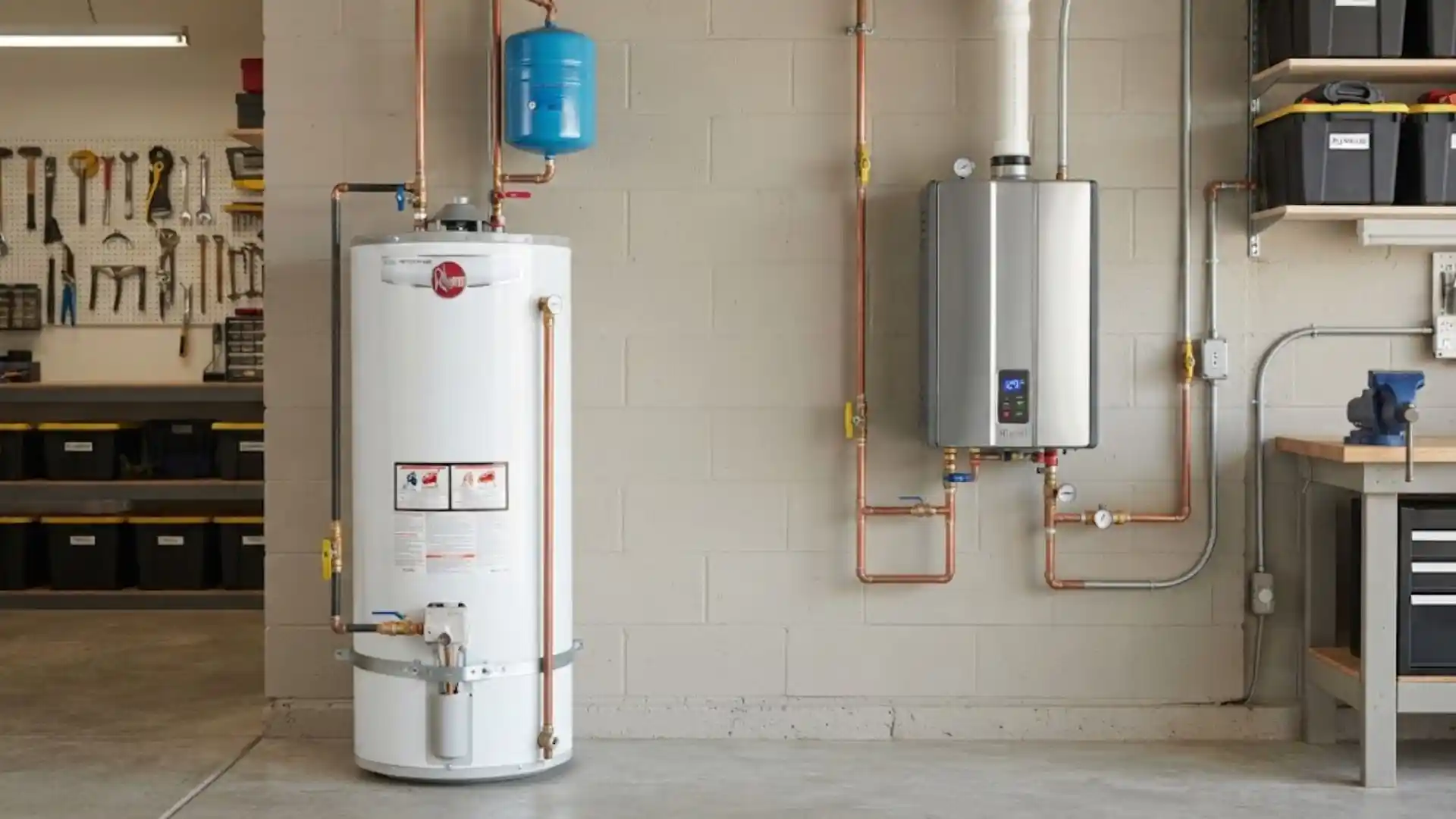
Every water heater guide covers the same basics. Tankless costs more upfront. Tank systems are simpler. Tankless lasts longer. Those generic guides miss something big: how much the right answer depends on factors specific to Bonita Springs. Seasonal occupancy patterns. Hard local water. The mix of gated communities and older neighborhoods that make up this market.
Seasonal Occupancy Changes the Math
A meaningful share of Bonita Springs homes, particularly in communities like Pelican Landing and Village Walk, sit empty for months while owners are up north. A tank system sitting idle for that long can develop sediment settling issues. Those show up the moment the water gets turned back on. Tankless systems only heat water on demand. They don't have that same stagnation problem. That makes them a genuinely better fit for a seasonal condo than the standard advice would suggest.
Hard Water Affects Both, But Differently
Bonita Springs' limestone-aquifer water is hard enough that scale buildup is a factor no matter which system you choose, as covered in our broader hard water guide. In a tank system, scale settles at the bottom and insulates the tank from its own heat source over time. That reduces efficiency gradually. In a tankless system, scale builds up inside the narrower heat exchanger. That can restrict flow and trigger error codes if the unit isn't descaled periodically. Tankless systems in this market genuinely need that maintenance step more than they would in a soft-water region. Skipping it shortens the system's real-world lifespan.
Community Type Matters More Than You'd Expect
In newer gated communities like Bonita Bay and The Brooks, most homes already run PEX plumbing and modern electrical or gas setups. A tankless conversion there is usually simple. Older neighborhoods like Imperial Shores tend to have legacy copper lines and older panels. A conversion there sometimes needs extra electrical or gas line work. That changes the cost math a fair amount.
Household Size and Usage Pattern
A large full-time family home in Bonita Bay, with multiple bathrooms running at once in the morning, has different demands than a two-person seasonal condo in Pelican Landing. Tankless systems are often rated by flow rate. Undersizing one for a busy household is a common mistake we see. It leads to complaints about uneven temperature when multiple fixtures run at once. Getting the sizing right matters more than the tank-versus-tankless choice itself.
| Factor | Favors Tank | Favors Tankless |
|---|---|---|
| Seasonal / vacant home | ✓ Avoids stagnation issues | |
| Lower upfront cost | ✓ | |
| Older home, legacy electrical/gas | ✓ Simpler install | |
| Newer PEX-plumbed home | ✓ Straightforward conversion | |
| Long-term efficiency (with maintenance) | ✓ |
What We Actually Recommend Locally
Tankless is often worth the higher upfront cost for full-time residents with easy electrical and gas access. It lasts longer. It handles this area's hard water better, as long as it's kept up. A well-maintained tank system is still a good choice for seasonal owners in older buildings, and our water heater repair team can often extend a tank's life further before replacement makes sense. Same for anyone who wants a lower upfront cost and a simpler install. There isn't one universal right answer. That's why we walk through your home's situation before recommending either option.
How Bonita Springs Utilities Factors In
Most Bonita Springs homes on BSU get water from the same regional aquifer, no matter the neighborhood. The hard-water upkeep conversation applies fairly evenly across BSU-connected communities. Homes still on private well, more common in older pockets near Imperial Shores, draw from a similar source. They face the same hardness issues. Sometimes there's even less consistency in mineral content, depending on the well. Either way, the tank-versus-tankless choice doesn't change much based on your water source.
Making the Final Call
If you're still torn between the two options, weigh occupancy pattern, home age, and household size. It often comes down to upfront cost versus long-term efficiency. A tank system gets you back to normal faster and cheaper today. A tankless system costs more now, but with proper maintenance for this area's water, it tends to pay that difference back over a longer working life. Neither choice is wrong. A conversation about your specific home usually clarifies which one actually fits.