
Older Bonita Springs neighborhoods with decades of tree growth, oaks, ficus, and other established landscaping common across areas like Imperial Shores, look great from the curb. Underground, those same root systems are often working their way toward the nearest source of moisture. That frequently means a sewer line.
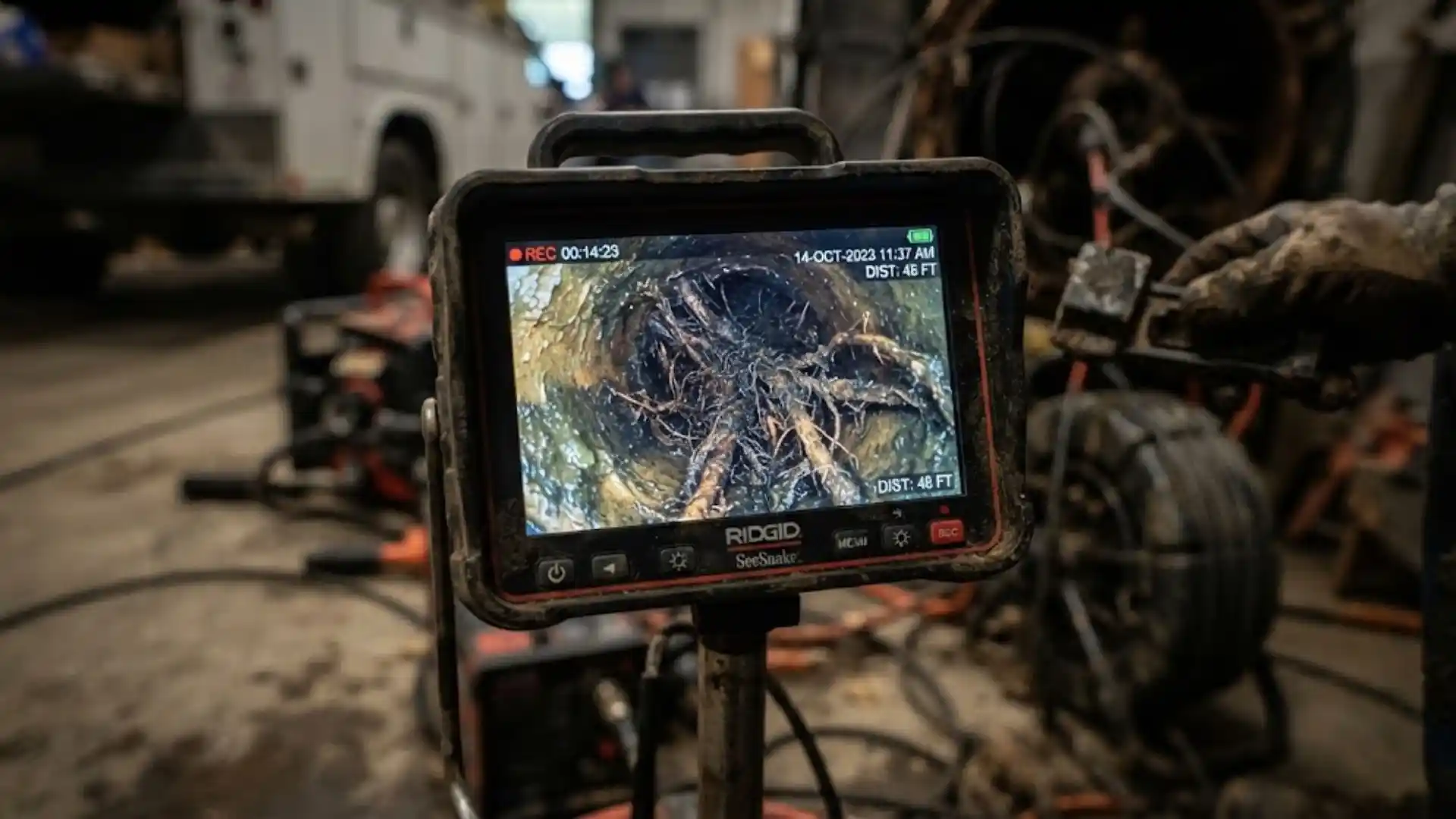
Why Roots Target Sewer Lines Specifically
A sewer line carries a constant, reliable source of moisture and nutrients. That makes it more attractive to root growth than the surrounding soil. Roots don't grow through solid pipe. They exploit small cracks, loose joints, or gaps at connection points, then expand once they've found a way in. Older clay or cast-iron sewer lines, more common in Bonita Springs' original-construction neighborhoods, have more joints. They're usually more vulnerable to this than the more continuous PEX or PVC lines used in newer communities like Bonita Bay and The Brooks.
Signs Roots Are Already in Your Line
Slow drains that don't respond well to normal snaking are a common early sign. So is a drain that clears temporarily, then slows down again within weeks. Gurgling sounds when a toilet flushes are another. So are unusually lush or green patches of grass over the sewer line's path. Recurring backups at the same fixture, usually the lowest drain in the house, are all worth checking with a camera inspection instead of repeatedly snaking the same symptom.
Why This Shows Up More in Certain Bonita Springs Areas
Established, older neighborhoods with mature trees planted decades ago carry more root intrusion risk. Their root systems have had more time to grow, and the underlying pipe is often older and more joint-heavy. Newer communities see less of this issue in the near term, even ones with a lot of landscaping like The Brooks' golf course areas. Their trees haven't had as long to establish big root systems, and the plumbing itself uses more continuous, less joint-prone materials.
Hydro-Jetting vs. Snaking for Root Intrusion
A cable snake can punch through root intrusion for a while. That's why the problem often seems to clear up, only to return within a few weeks or months. Hydro-jetting uses high-pressure water to clear the full inside diameter of the pipe. It's usually more effective against root intrusion, since it actually clears root material from the pipe walls instead of just punching a path through the middle. For a line with confirmed, recurring root problems, jetting on a preventive schedule tends to cost less over time than repeated snaking visits that only offer temporary relief.
| Sign | What It Suggests |
|---|---|
| Recurring clogs after snaking | Root intrusion not fully cleared |
| Gurgling drains during flushes | Partial blockage affecting airflow in line |
| Lush grass over the sewer line path | Roots or minor leaking feeding growth above |
| Backups at the lowest fixture | Main line obstruction, not isolated clog |
Should You Remove the Trees?
Removing mature, established trees is a drastic step, and usually not the first or only fix worth considering. In most cases, jetting clears the root intrusion directly. In more severe cases, relining or replacing the affected pipe section fixes the plumbing issue without giving up decades-old landscaping. Tree removal is sometimes a last resort for a tree planted directly over a known problem line. It's rarely the first step we'd suggest.
Preventing Root Intrusion in the First Place
For newer construction or a recently replaced sewer line, thinking ahead about tree placement can head off this issue entirely. Plant new trees with the line's path in mind. For existing older lines in established Bonita Springs neighborhoods, a periodic camera inspection catches early-stage root intrusion before it becomes a full backup, even without active symptoms. That's a lot less disruptive than an emergency sewer line call.
Where This Comes Up Most in Our Service Area
Imperial Shores and other river-side, established neighborhoods with decades-old landscaping see this issue more than newer communities. It comes down to tree maturity plus older, more joint-heavy pipe. Naples Park's dense grid of small, older lots shows a similar pattern. Mature trees there are often planted close to property lines, and by extension, close to sewer laterals. Newer developments like Bonita Bay, The Brooks, and Village Walk usually have younger landscaping and more continuous plumbing materials. That pushes this problem further out on the timeline. It's not off the table entirely, though, since those trees keep maturing over the coming decades.
A Long-Term View on Root Management
Root intrusion isn't usually a one-time fix. Even after clearing a line with hydro-jetting, roots from the same tree can grow back toward the pipe over time, if the underlying crack or joint issue isn't fixed too. For homes with a documented history of recurring root problems, a periodic preventive jetting schedule tends to cost less over the long run than waiting for symptoms to come back.