When a Clogged Toilet Needs Immediate Help
If the water's rising and you're standing there deciding whether to flush again, don't. Stop, and keep reading for what to do while help is on the way.
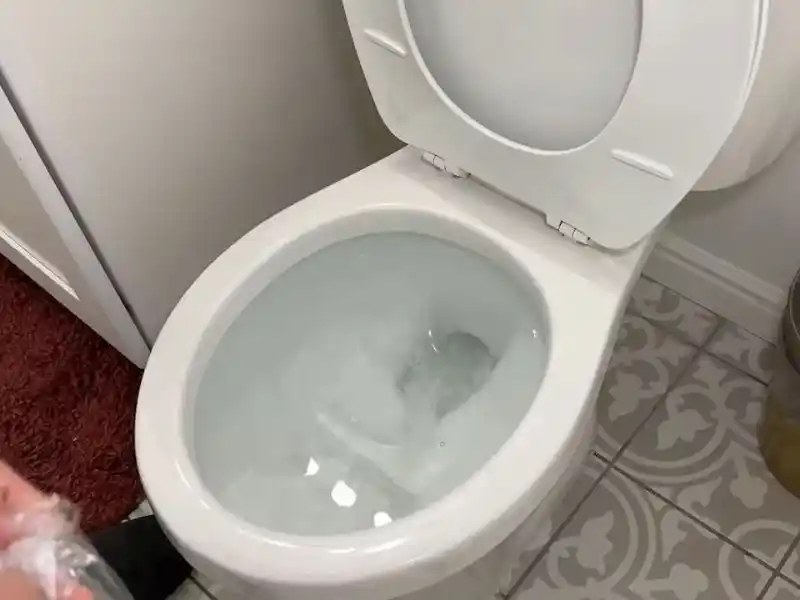
Water rising toward the rim with no sign of draining is the clearest emergency signal. So is a backup that affects more than one fixture at the same time. This points to a main line problem rather than something isolated to the toilet itself — the kind of situation covered in our drain cleaning service. A single toilet that's slow to drain but not actively overflowing can usually wait for a standard appointment. Though it's worth having looked at before it turns into a bigger problem.
What Happens If You Keep Plunging It
Repeated plunging on a clog that won't clear usually means the real blockage is further down than a plunger can reach.
Water can back up onto the floor
Each flush attempt on a clog that isn't clearing risks overflow, which means bathroom flooring and subfloor damage.
The blockage can grow
Waste and paper keep adding to a partial clog every time the toilet is used, turning a minor blockage into a full stoppage.
It may signal a bigger line issue
A toilet that won't clear with a plunger sometimes means roots or a deeper obstruction affecting more than just that fixture.
Why Plunging Doesn't Always Work
A plunger only reaches clogs sitting right in the toilet trap. Anything further down needs different tools.
- A cable snake reaches clogs beyond the trap that a plunger can't touch
- Hydro-jetting handles root intrusion or buildup further down the line
- We check whether it's isolated to one fixture or a sign of a main line problem
- We identify the actual cause instead of just clearing the symptom
Flushable Wipes Are a Common Culprit
Despite the label, flushable wipes don't break down in water the way toilet paper does. They're one of the most frequent causes of stubborn toilet clogs and, further down the line, sewer backups we see on service calls. If clogs keep happening in a household that uses them, that's usually the first thing worth ruling out.
Patterns We See on Calls Like This
A frequent call is a household dealing with the same toilet clogging repeatedly over several weeks, usually after switching to a new brand of wipes or paper without realizing it. Once we identify and remove the actual blockage, the fix is usually quick — the harder part is helping the household spot the pattern so it doesn't keep happening.
| Service | Typical Cost Range | What Affects the Price |
|---|---|---|
| Toilet auger / cable snake | $120 – $280 | Clog depth, toilet type |
| Toilet pull & reset (deep obstruction) | $250 – $500 | Obstruction type, toilet removal needed |
| Emergency after-hours response | $150 – $300 (dispatch) | Time of day |
Ranges reflect typical SWFL market pricing and vary by clog depth and time of service. Final pricing is confirmed on-site.
Frequently Asked Questions
Why does my toilet keep clogging even after plunging?
A clog that keeps coming back after plunging usually means the blockage is deeper in the line than a plunger can reach, or there's a partial obstruction further down that's catching debris repeatedly. That often needs a cable snake or camera inspection to resolve.
Can flushable wipes actually clog a toilet?
Yes, despite the label. Flushable wipes don't break down the way toilet paper does, and they're one of the most common causes of stubborn clogs and sewer line backups we see.
When is a clogged toilet an emergency?
If water is rising toward the rim with nowhere to go, or multiple drains in the house are backing up at once, that's worth an emergency call rather than waiting. A single slow-draining toilet with no other symptoms can usually wait for standard scheduling, though it's worth a look at our general plumbing repair page if other small issues are piling up too.