
Most general plumbing advice recommends flushing a water heater once a year. That's a reasonable default for an average US market. But Bonita Springs isn't an average market when it comes to water hardness. The standard once-a-year rule undersells how much scale actually builds up here.
Why Bonita Springs Water Needs More Frequent Flushing
The water supplying most of Bonita Springs comes from a limestone aquifer. That's true whether you're on Bonita Springs Utilities or a private well drawing from the same regional source. It carries a lot more mineral content than softer-water regions. Every gallon that passes through a water heater leaves behind a small amount of sediment. In a hard-water market like this one, that sediment builds up faster than the generic annual-flush advice accounts for.
A More Realistic Schedule for This Market
For a full-time household on unfiltered Bonita Springs water, flushing every six months is a more accurate baseline than the standard yearly recommendation. Homes with a water softener already installed can usually stretch that to once a year, since the softener removes much of the mineral content before it reaches the tank. Seasonal homes that sit vacant part of the year benefit from a flush at the start of each occupied season. That clears sediment that settled during the vacancy and catches valve or component issues early.
Signs You're Overdue
Rumbling or popping noises from the tank are usually the clearest sign sediment has built up past a comfortable level. Reduced hot water capacity is another common sign, where the tank seems to run out faster than it used to — see our full warning-signs guide for the complete list. Sediment buildup takes up physical space that used to hold water. If you can't remember the last time your unit was flushed, or don't know if it ever has been, that's usually a sign you're overdue regardless of the calendar.
What Happens If You Skip It
Sediment buildup doesn't just cut efficiency. It speeds up wear on the tank itself and on heating elements that have to work through an insulating layer of scale to heat the water. In Bonita Springs specifically, the tank is already dealing with salt-air corrosion on the outside. Added internal wear from unflushed sediment can meaningfully shorten a unit's working life. Homeowners who skip flushing for years at a time are often the ones surprised by a water heater failing well before the ten-year mark.
| Home Type | Recommended Flush Frequency |
|---|---|
| Full-time home, no water softener | Every 6 months |
| Full-time home, with water softener | Once a year |
| Seasonal / vacant part of the year | At the start of each occupied season |
DIY or Call a Professional?
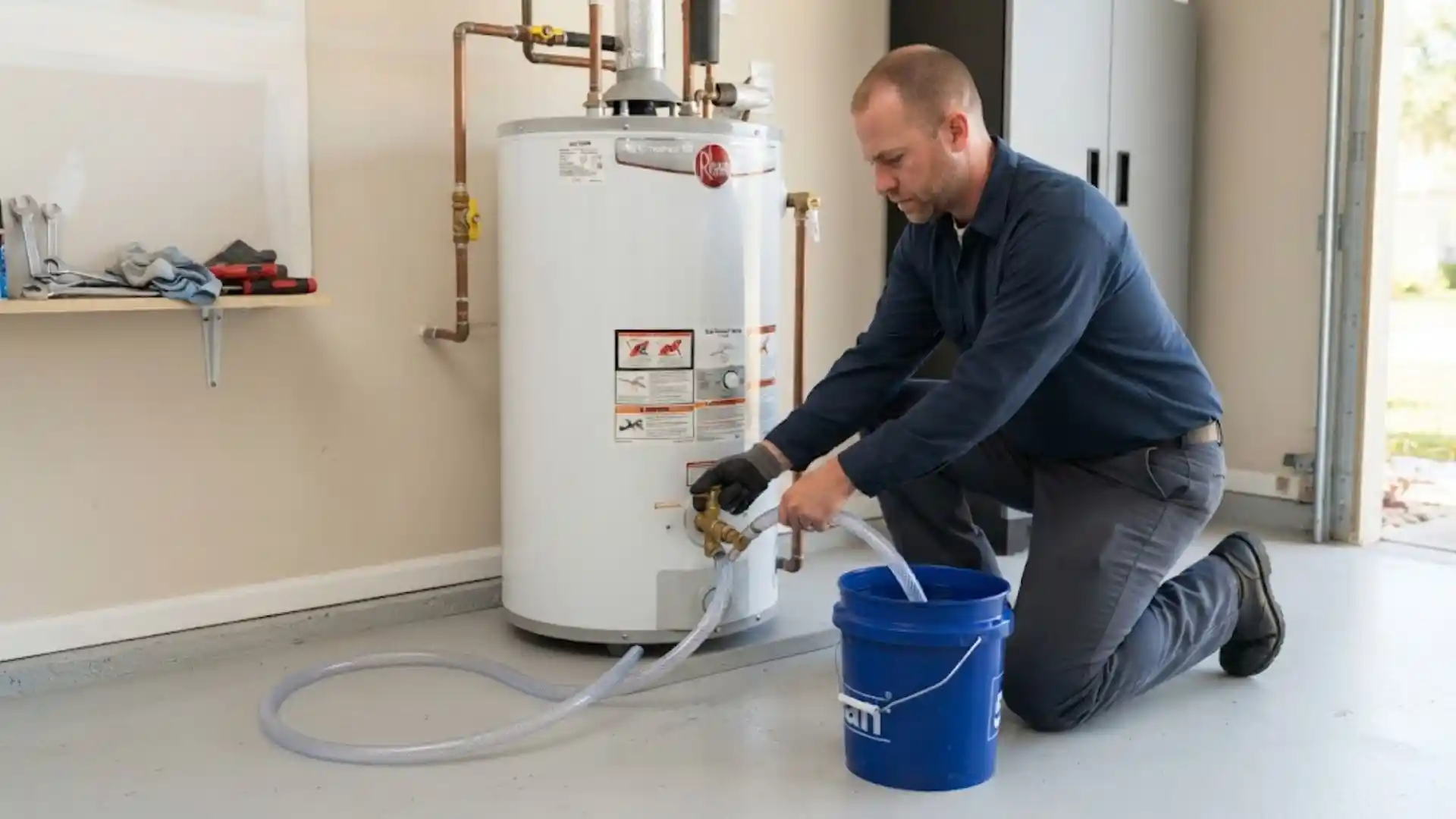
A basic tank flush is within reach for a comfortable DIY homeowner. Shut off power or gas. Connect a hose to the drain valve. Let the tank empty and refill. That said, older drain valves in Bonita Springs units sometimes fail or clog with sediment during the process, especially ones that have never been flushed. That turns a simple maintenance task into an unplanned repair. If it's been several years since the last flush, or you're not confident in the valve's condition, having a professional handle the first flush avoids a mid-task surprise.
Pairing Flushing With a Water Softener
For homeowners tired of the flush schedule this area demands, a whole-home water softener addresses the root cause rather than managing the symptom repeatedly. It's an added upfront investment. It reduces scale buildup across the home's plumbing, not just at the water heater. This is worth factoring in when weighing the cost against ongoing flush maintenance.
Well Water vs. Bonita Springs Utilities
Homes on Bonita Springs Utilities and homes on private well both draw from water sources with real mineral content. Private wells are more common in older areas like Imperial Shores and inland communities like Golden Gate. Well water can vary more from property to property, depending on the specific well's depth and condition. If you're on a private well, it's worth testing the water now and then. Some wells run harder than the general BSU-supplied average, which would mean flushing even more often than the standard recommendation for this market.
Building It Into Your Routine
The easiest way to stay on top of this is tying the flush schedule to something you already do regularly. Check it alongside hurricane season prep each spring, for instance, or at the start of each stay if you're a seasonal homeowner. Treating it as a recurring calendar item, rather than something to remember on your own, tends to be the difference between homeowners who actually stay current and those who realize years have passed since the last flush. For Bonita Springs specifically, pairing this task with your annual storm prep checklist keeps it from ever falling off your radar.